Ted Latimer
Towards ZeroTed Latimer is a twenty-five-year-old friend and former ally of Kay Strange, known for his striking looks, dancing, and polished manner. Beneath that confident social presence, however, is a man still wounded by his love for Kay and by the arrival of Nevile Strange, who became her husband. Ted’s lightness and apparent composure therefore conceal a more vulnerable role in the gathering at Gull’s Point: he is both an old intimate of Kay and an unsettling observer of the unhappiness surrounding the household.
Identity and Introduction
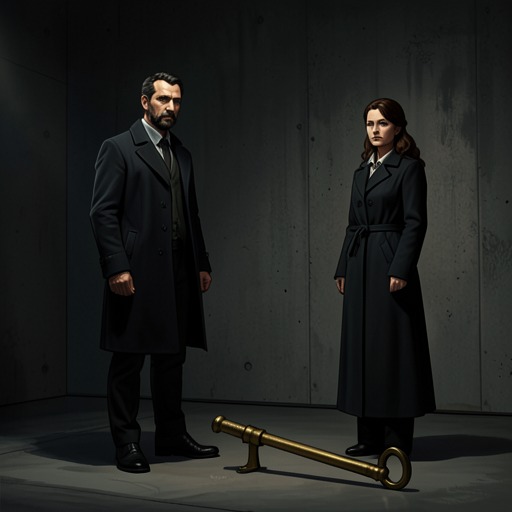
Ted is introduced as extremely good-looking, dark, and deeply sunburnt, with dark eyes capable of eloquent expression. He is also described as a wonderful dancer, while his controlled, actor-like voice suggests someone skilled at managing the impression he makes. The contrast between these features and the dismissive judgment of unsympathetic old colonels, who attach an ethnic slur to his appearance, marks him as a figure viewed through both attraction and social prejudice.
His ease is not simply physical. Ted speaks with assurance and often treats tense situations lightly, a manner that can make him seem nerveless or dangerous to those who do not know him well. Yet the story gradually supplies a corrective to that first impression: beneath the performance is a young man capable of genuine attachment and pain.
History with Kay Strange
Kay has known Ted since she was fifteen. Their shared past is active and physical: they spent time together at Juan les Pins, sunning themselves, dancing, and playing tennis. The narrator describes them not only as friends but as allies, suggesting a closeness built through companionship and a sense of being on the same side. Their history gives Ted a claim to emotional intimacy, though not to ownership of Kay.
That distinction is made explicit when Ted complains that Nevile took the woman he regarded as his girl. Kay answers that she was never his girl, because circumstances had prevented it. Her reply leaves the earlier attachment recognizable while refusing to turn it into a settled relationship. Ted’s resentment is therefore personal but also bound up with a missed possibility: he loved Kay, yet their friendship did not become the partnership he wanted.
The September Gathering
Ted remains connected to Kay after her marriage to Nevile. While Kay and Nevile plan to spend a fortnight at Gull’s Point in September, Ted says he will stay at the Easterhead Bay Hotel and has already booked a room. Kay presents the forthcoming house party cheerfully, naming herself and Nevile, Nevile’s former wife, and a Malayan planter home on leave. Ted’s separate accommodation keeps him outside the household while placing him close to the group and its tensions.
Mary Aldin later tells Kay that she has invited Ted to dinner. Kay responds positively, but Nevile’s immediate question about whether Ted is staying in the area indicates that his presence is not incidental to the people assembled there. The dinner invitation brings Kay’s old friend into the orbit of the house, where familiar affections and present loyalties are difficult to keep apart.
At a gathering, Kay turns deliberately toward Ted and asks him to dance after Nevile has moved a table for her. Ted takes her arm at once. Their dancing is perfectly coordinated, with the pair swaying and bending in unison; to an observer, the performance is lovely to watch, and Mr. Treves calls it almost professional. The scene gives their old intimacy a visible form. Kay’s choice of partner and their effortless physical accord stand in contrast to the strained relationships around them, though the dance itself does not establish that she intends to renew their former attachment.
Hurt Beneath the Performance
On the beach, Mary asks Ted what has become of Kay. He replies that she has been claimed by her legal owner, referring to Nevile as her husband. The phrase is flippant, but its tone changes Mary’s understanding of him. Looking across the sands at Kay and Nevile walking by the water, she recognizes that Ted had truly loved Kay and had been hurt when Nevile won her away.
This is a significant revision of Mary’s earlier impression. She had regarded Ted as nerveless, queer, and even dangerous; now she sees someone young and wounded. His composure has not meant indifference. The gap between his joking manner and the feeling Mary detects beneath it makes him more legible without making him transparent: he can reveal pain indirectly, through a dry remark, rather than offering a direct confession.
Warnings and Narrative Role
When Mary urges Audrey Strange not to expose herself to further unhappiness, Ted tells her that she knows little of the people beyond her protected enclosure and that much may happen in the near future. Asked what he means, he laughs and declines to explain, telling her to wait and see. The exchange is cryptic, not a disclosure of a specific plan or event. It nonetheless gives Ted a foreboding note within the social scenes: his apparently casual manner carries an awareness—or at least a suggestion—of approaching trouble.
Ted’s narrative function rests on the tension between performance and feeling. He is introduced through looks, voice, and social skill; his dance with Kay makes their old alliance visible; and his remark about her legal owner allows Mary to recognize the injury beneath his wit. His warning to Mary adds a different ambiguity, leaving his knowledge and intentions uncertain. Together, these moments keep him from being only a rejected admirer or a polished entertainer: he is a participant in the gathering’s emotional conflicts and a source of unease as its consequences begin to loom.